Pat Kirill: It's time to give a theological assessment of Phanar’s actions
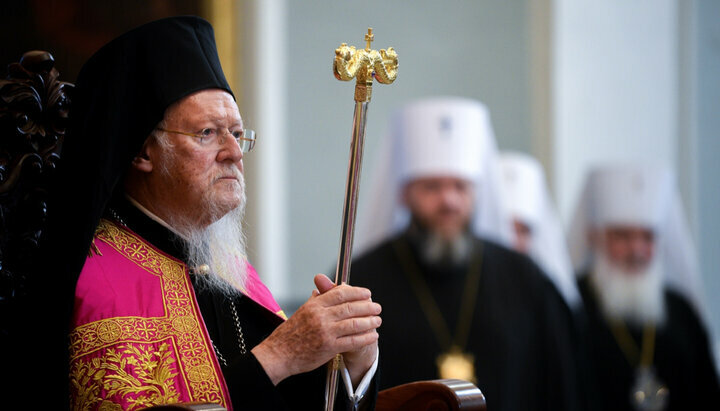
The head of Phanar with the Ukrainian schismatics recognized by him. Photo: pomisna.info
What is needed is a theological analysis of what is happening in Ecumenical Orthodoxy today. The Primate of the Russian Orthodox Church, His Holiness Patriarch Kirill of Moscow and All Rus, said this when opening the conference "World Orthodoxy: Primacy and Conciliarity in the Light of the Orthodox Doctrine", Patriarchia.ru reports.
He stressed that the ecclesiological tendencies promoted by Phanar, which used to raise concerns, today have caused significant damage to the relationship of the Churches. An especially dangerous and grave violation of the canonical order was the invasion of the Patriarchate of Constantinople into the territory of another Local Church – Ukraine.
“This invasion can really have disastrous consequences that could destroy relations between the Local Churches,” noted the Primate of the Russian Orthodox Church. “Meanwhile, in the history of the Church there have often been cases when critical situations gave impetus for a more thorough understanding of the doctrine and various practical issues of church life. I am convinced that we need a theological analysis of what is happening in Ecumenical Orthodoxy nowadays."
In this regard, the Patriarch explained how he sees the goals and objectives of this conference.
First, it is necessary to analyze and see ecclesiological reasons for the current crisis. In his opinion, “it is necessary to correlate the understanding of primacy and conciliarity, which is today articulated by Constantinople, with the primordial understanding enshrined in the Tradition of the Church. This is the most important thing: we can prove the erroneous position of Constantinople only by correlating this current position with what has always taken place in the Orthodox Church in terms of being aware of the role and significance of the former."
Secondly, "it is necessary to evaluate, theologically and canonically, those acts that result from misunderstanding of primacy." For this end, it is important to carefully consider, among other things, the political context of the “granting of autocephaly to the OCU” – “the schismatic structure with which the Patriarch of Constantinople tried to replace the actually existing Ukrainian Orthodox Church."
Thirdly, the analysis of the problems that have arisen should be carried out in the context of the history of the Church, since "from the relationship of the Local Orthodox Churches in the past, from their position in a particular state, one can learn lessons that will be useful in our time."
“Finally, it is important to once again comprehend what the church schism means and how the Local Churches should react to it. Is it permissible to enter into prayer and Eucharistic communion with schismatics? What canonical consequences does such an introduction entail? Can an ecclesiastical authority be considered as legitimate if it violated the church system through concelebration with schismatics and self-ordained persons who do not have canonical consecration?
Of course, church canons give quite comprehensive answers to all these questions. But how to apply these canons in practice? What exactly do they mean in the current situation? Where are the boundaries of oikonomia, and where should akribeia begin? I hope that the participants in this conference will reflect on this topic as well,” the Patriarch explained.
It is important that not only the hierarchs of the Churches, but also representatives of the academic theological community from different countries who also take part in the conference, give an assessment of the attempts to legalize the schism, he added.
“I hope that their voice will be heard where the schism is widening and eepening today. Let us try to stop it by joint efforts in order ‘to bring so many parts divided among themselves back to the unity of the Church’, according to the words of St. Basil the Great,” summed up the Primate of the Russian Orthodox Church.
The UOJ wrote that on September 16, 2021, a conference on the topic of primacy and conciliarity in the Church began work in Moscow. At the opening, the Primate of the Russian Orthodox Church emphasized that the Head of the Church is Christ, not the Patriarch of Constantinople.
Lexo gjithashtu
Pakistan: Gjykata e Lartë konfirmoi dënimin me vdekje për të krishterin Qaiser Ayub
Vëllai i tij më i ri, Amoon, u shpall i pafajshëm për mungesë provash, ndërsa Qaiser mbetet në burgun e Sahiwalit.
Arkeologët zbuluan në Jeruzalem ujësjellës që furnizonte Malin e Tempullit
Ujësjellësi i lashtë, ndërtuar nga Hasmonenjtë, sillte ujë nga burimet në jug të Betlehemit deri te Mali i Tempullit 2000 vjet më parë.
Deputetja e CDU-së paraqet ankesë ndaj emisionit të Böhmermann në ZDF
Caroline Bosbach i ka kërkuar Këshillit të Televizionit të ZDF-së të shqyrtojë shprehjet e Jan Böhmermann për Jezu Krishtin në emisionin „ZDF Magazin Royale“.
Në Vatikan u mbajt koncert në kujtim të Patriarkut Ilia II
Kori i Qendrës Shtetërore të Muzikës së Batumit dha një koncert solo në kishën e Shën Agathës, me diplomatë nga 30 vende dhe përfaqësues të diasporës gjeorgjiane.
Pse ortodoksët festojnë Lindjen e Krishtit në data të ndryshme
Dallimi mes kalendarit julian dhe atij gregorian prek lutjen, agjërimin dhe kujtesën e kishës, duke ngritur pyetje mbi unitetin ortodoks.
Kronika e takimit të Kievit 2018 rihap debatin kishtar ukrainas
Dokumenti i publikuar nga UOJ America dhe kundërshtimet kanonike të Kishës së Shqipërisë kërkojnë një lexim të kujdesshëm të fakteve dhe interpretimeve.