Russian Church tells why it does not protest against the war
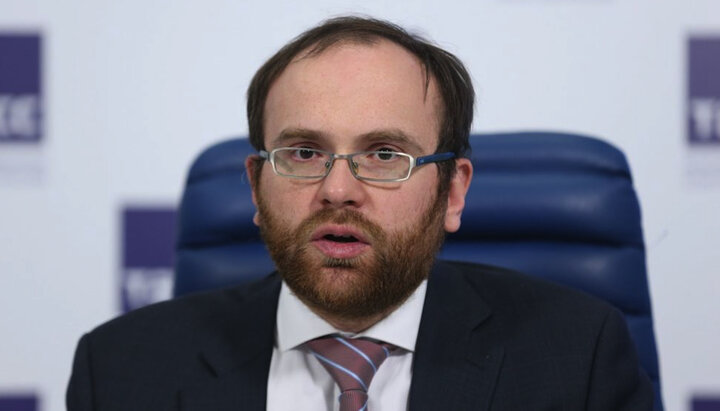
Vakhtang Kipshidze, Deputy Chairman of the Synodal Department for Church Relations with Society and the Media, explained why the Russian Orthodox Church does not protest against the war.
In the Chronicle of the New World program on RTVI, Kipshidze said that "Christian churches have always blessed the military service," viewing it "as a service of protection, a service to defend the Fatherland, and a service to one's neighbors, for whose sake a person goes to the front, defends them, and accepts death."
“This part of ecclesiastical teaching does not imply what we have always called non-resistance to evil with violence,” because a person has “the right to self-defense,” said a representative of the Russian Orthodox Church.
Kipshidze mentioned the appeal of 300 priests of the Russian Orthodox Church who spoke out against the Russian invasion of Ukraine and noted, “Western countries want the Russian Orthodox Church to become an opposition force in society on the issue of war, and they consider this appeal of the priests in this very context.”
“The Church will not become part of the political opposition, because the Church is outside of politics. She is on the side of the people,” the church official assured.
He noted that "in some ideal world, there may be a non-politicized anti-war position." “But we live in the real world and now our anti-war position is monopolized by anti-Russian political forces and is used to provoke internal divisions in Russian society, rather than to establish peace,” Kipshidze said.
In his opinion, that “alternative opinion (anti-war – Ed.), within the Russian Orthodox Church should remain outside the church fence, because it has become a form of political activity, while there is no place for political activity in the Church.”
Earlier, the UOJ wrote that the head of the Phanar "fraternally" called on Patriarch Kirill to give up the throne.
Lexo gjithashtu
Patriarku i Jeruzalemit uroi Gjeorgjinë për 1700-vjetorin e krishterimit
Theofili III theksoi trashëgiminë e krishterë gjeorgjiane, praninë e gjeorgjianëve në Tokën e Shenjtë dhe përgjegjësinë për brezat e ardhshëm.
Mitropoliti Onufri uroi Kishën Gjeorgjiane për 1700-vjetorin
Kreu i Kishës Ortodokse të Ukrainës i uroi Patriarkut Shio III dhe popullit gjeorgjian 1700-vjetorin e shpalljes së krishterimit fe shtetërore.
Papa Leoni XIV bekoi kullën e Krishtit të Sagrada Familias në Barcelonë
Kulla e Jezu Krishtit ka arritur 172,5 metra, një shekull pas vdekjes së Antonio Gaudit, ndërsa ndërtimi i bazilikës pritet të përfundojë në mesin e viteve 2030.
Pakistan: Gjykata e Lartë konfirmoi dënimin me vdekje për të krishterin Qaiser Ayub
Vëllai i tij më i ri, Amoon, u shpall i pafajshëm për mungesë provash, ndërsa Qaiser mbetet në burgun e Sahiwalit.
Arkeologët zbuluan në Jeruzalem ujësjellës që furnizonte Malin e Tempullit
Ujësjellësi i lashtë, ndërtuar nga Hasmonenjtë, sillte ujë nga burimet në jug të Betlehemit deri te Mali i Tempullit 2000 vjet më parë.
Deputetja e CDU-së paraqet ankesë ndaj emisionit të Böhmermann në ZDF
Caroline Bosbach i ka kërkuar Këshillit të Televizionit të ZDF-së të shqyrtojë shprehjet e Jan Böhmermann për Jezu Krishtin në emisionin „ZDF Magazin Royale“.