KDAiS rector: Canons of Ecumenical Councils limit Phanar head's power
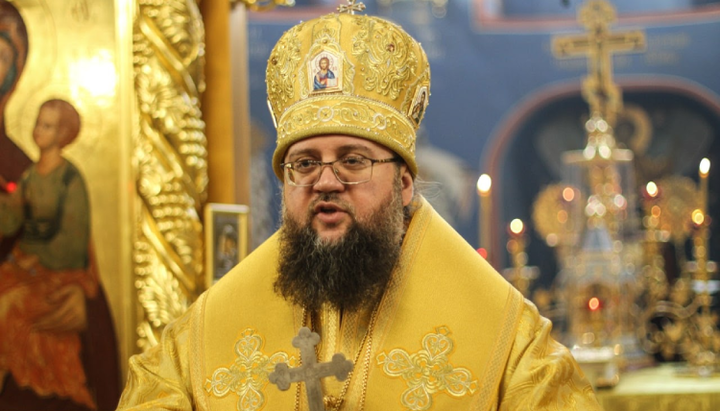
Bishop Sylvester (Stoychev) of Belogorod. Photo: kdais.kiev.ua
The canons of the Ecumenical Councils, with which Phanar justifies its claims to exclusive power in the Church, limit its interference in the affairs of other dioceses, Bishop Sylvester (Stoichev) noted in an interview with the Pravlife portal.
There are two rules of the Ecumenical Councils that are referred to when trying to justify the ambitions of the Patriarch of Constantinople for primacy in the Orthodox Church. This is the 3rd canon of the II Ecumenical Council and the 28th canon of the IV Ecumenical Council.
Both rules distinguish the See of Constantinople because of the increased political significance of the city itself, which is now the seat of "the king and the senate", but do not give Phanar any special power in the Church, Bishop Sylvester emphasized.
“As can be seen from these canons, the status and powers of the bishop of Constantinople in ancient times were associated with the political significance of Constantinople as a new capital,” he said. "Not with the antiquity of the Holy See, not with apostolic origin, and even less with Divine right, but only with the fact that this is the city of the king and the senate."
Canon 28 of the Council of Chalcedon allows the Bishop of Constantinople to ordain metropolitans in some of the neighboring regions. But even before that he tried to expand his power, since he had only the capital under his control.
“This canon not only allocates an ecclesiastical area to the Bishop of Constantinople, but also restricts his interference in the affairs of other dioceses. This is how the Byzantine interpreters understand this canon,” said the rector of the Kyiv Theological Academy and Seminary.
“Let's remember once again – Constantinople does not exist. There is Istanbul. The Greeks mythologized Constantinople, making it a kind of Kitezh-city in the Greek manner. Constantinople is a city of memory, a city of myth, a ghost city and a city of dreams. This is a dream of the former status, splendor and greatness of the Orthodox empire. As one author said, “The Greeks live as if they hadn’t heard about the fall of Constantinople,” summed up the hierarch of the UOC.
As the UOJ reported, earlier the rector of the Kyiv Theological Academy compared the independence of the UOC and the OCU.
Lexo gjithashtu
Patriarku i Jeruzalemit uroi Gjeorgjinë për 1700-vjetorin e krishterimit
Theofili III theksoi trashëgiminë e krishterë gjeorgjiane, praninë e gjeorgjianëve në Tokën e Shenjtë dhe përgjegjësinë për brezat e ardhshëm.
Mitropoliti Onufri uroi Kishën Gjeorgjiane për 1700-vjetorin
Kreu i Kishës Ortodokse të Ukrainës i uroi Patriarkut Shio III dhe popullit gjeorgjian 1700-vjetorin e shpalljes së krishterimit fe shtetërore.
Papa Leoni XIV bekoi kullën e Krishtit të Sagrada Familias në Barcelonë
Kulla e Jezu Krishtit ka arritur 172,5 metra, një shekull pas vdekjes së Antonio Gaudit, ndërsa ndërtimi i bazilikës pritet të përfundojë në mesin e viteve 2030.
Pakistan: Gjykata e Lartë konfirmoi dënimin me vdekje për të krishterin Qaiser Ayub
Vëllai i tij më i ri, Amoon, u shpall i pafajshëm për mungesë provash, ndërsa Qaiser mbetet në burgun e Sahiwalit.
Arkeologët zbuluan në Jeruzalem ujësjellës që furnizonte Malin e Tempullit
Ujësjellësi i lashtë, ndërtuar nga Hasmonenjtë, sillte ujë nga burimet në jug të Betlehemit deri te Mali i Tempullit 2000 vjet më parë.
Deputetja e CDU-së paraqet ankesë ndaj emisionit të Böhmermann në ZDF
Caroline Bosbach i ka kërkuar Këshillit të Televizionit të ZDF-së të shqyrtojë shprehjet e Jan Böhmermann për Jezu Krishtin në emisionin „ZDF Magazin Royale“.